


A complete guide to washtroughs
- Product
- Insights
How to choose them, specify them and use them well
When people start planning a washroom, they often know what they need in broad terms. They want something robust, easy to clean and suitable for the number of people using it.
What they are less sure about is the format.
One of the first questions we usually ask is whether you’re considering a vanity unit or washtrough?
Most of the time, the answer is not obvious at the start. It depends on who will be using the space, how busy it will be and how the washroom needs to perform day to day.
This guide is here to help you make that decision, and to explain how washtroughs work, where they are most effective and what to think about when specifying them.
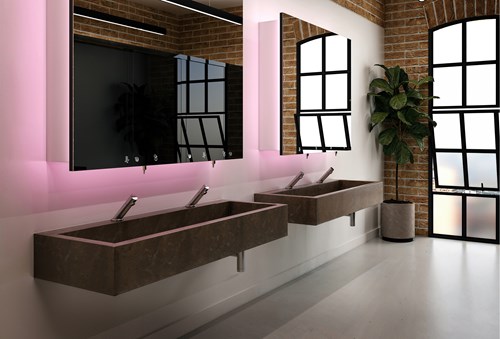
What is a washtrough?
A washtrough is a long, shared handwashing unit designed for more than one person to use at the same time.
Instead of separate basins set into a vanity unit, a washtrough provides one continuous washing area, with several taps along its length.
They are most often used in commercial and public washrooms, where people arrive in groups and handwashing needs to happen quickly and efficiently.
Vanity or washtrough, how do you decide?
Many clients do not come to a project knowing which they want.
The choice usually comes down to how the washroom will be used.
Washtroughs are often the better option when:
A traditional vanity unit with individual basins can still work well where:
There is no single right answer. The best choice is the one that fits the reality of the building.
Where do washtroughs work best?
Washtroughs are commonly used in:
In these environments, they help improve flow, reduce queues and simplify cleaning and maintenance.
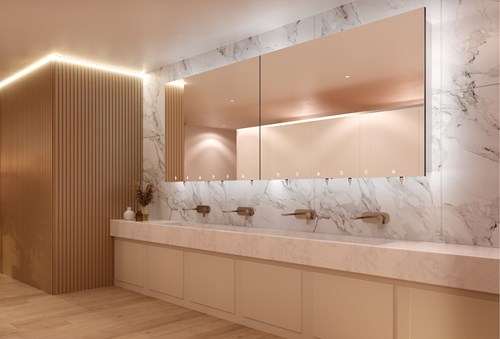
Why are washtroughs often used in busy washrooms?
Easier to keep clean
Washtroughs are usually made from solid surface materials with smooth, seamless finishes. With fewer joints and corners, there are fewer places for dirt and germs to build up. This makes cleaning quicker and more effective, which matters in high-use spaces.
Better control of water
A continuous trough holds water more effectively than individual basins. This helps reduce splashing onto floors and lowers the risk of wet, slippery surfaces.
Built for heavy use
With concealed fixings and a solid construction, washtroughs are well suited to public environments. They are harder to tamper with and less likely to suffer accidental damage.
Simpler plumbing
A single washtrough needs fewer waste connections than multiple basins. That can mean fewer blockages and less maintenance over time.
Key Considerations When Choosing a Washtrough
Space and layout
Available space will influence the depth and profile of the washtrough.
In tighter areas, slimmer designs may be needed. In larger washrooms, deeper profiles can help with drainage and splash control.
Washtroughs can also be made in longer runs, joined neatly on site where required.
Who is using the washroom?
This is one of the most important factors.
In schools, reach heights matter. Children need to be able to reach taps comfortably, and designs often need to meet specific DfE guidance.
In public washrooms, safety and durability are key. Underpanels are often used to protect pipework and prevent access behind the trough.
Compliance and standards
In education settings, washroom layouts and fittings must meet DfE guidance. DfE compliant washtroughs, designed for schools, ensure safety, durability and hygiene are taken into account from the start.
In other commercial buildings, washtroughs should align with relevant standards for communal washing facilities and with general building regulations for non-domestic spaces.
Budget and long-term value
When you look beyond the initial purchase price, washtroughs often compare well with traditional vanity and basin layouts. Their durability, ease of cleaning and ability to be repaired can deliver better value over the life of the washroom, especially where usage is high.
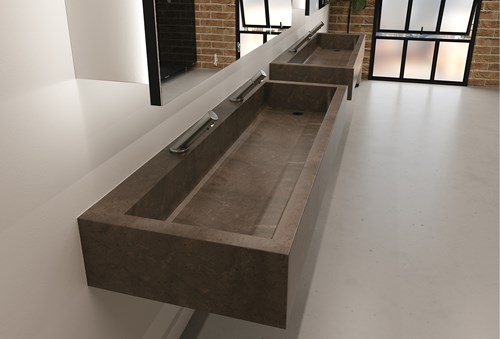
What materials are washtroughs made from?
Most modern commercial washtroughs are made from solid surface, a composite material made from an acrylic-mineral blend. It is solid all the way through, not just coated on the surface, which makes it well suited to busy washrooms.
The material is non-porous, so it does not absorb water or harbour bacteria. It is also resistant to everyday impact, thermal shock from hot and cold water, and frequent cleaning. Because it can be thermoformed, solid surface can be shaped into different profiles to suit space, drainage and user needs.
If the surface becomes scratched or lightly damaged, it can usually be repaired rather than replaced, helping to extend the life of the washtrough.
In some healthcare and clinical environments, stainless steel washtroughs are also specified. These are typically used where strict infection control regimes or aggressive cleaning chemicals are required. Stainless steel performs well in specialist settings, but it is less commonly used in general commercial and education washrooms.
The most appropriate material will depend on the sector, cleaning regime and performance requirements of the space.
Comparing Washtrough Profiles
Washtroughs come in different profiles for practical reasons. The right choice depends on how the space is used.
Sloping washtroughs
Sloping profiles help water drain away more effectively. They are often used in busy washrooms where splash control and hygiene are priorities.
Flat-bottomed washtroughs
Flat-bottomed designs are useful where space is limited. Slimline versions are often chosen for schools, where depth and reach heights need careful control.
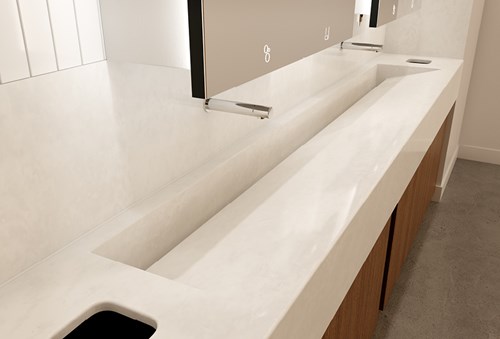
Concealed waste washtroughs
Concealed waste designs offer a cleaner look by hiding the waste outlet. They can work well visually, but cleaning access should be considered early, as this is a common question from facilities teams.
Making the right choice for your washroom
Washtroughs are a practical, hygienic and durable solution for busy washrooms. When specified well, they make spaces easier to clean, safer to use and more resilient over time.
Thinking about users, space, materials and long-term maintenance early in the process helps ensure the washroom works properly long after it has been handed over.
If you are planning a new washroom or refurbishing an existing one, an early conversation can help clarify whether a washtrough is the right fit. Our Specification Managers have extensive experience in commercial washroom design and can help you decide what will work best for your project.
Or book an appointment at the Washroom Design Centre in London to see the options in person. Explore how lighting, colour and configuration shape the space, and get expert guidance on aligning your design intent with a robust, well-considered specification.
In the meantime, you can visit our Technical Library to access brochures, CAD blocks, datasheets and more to help you plan your project.
Complete this quick form to sign up to our newsletter. You’ll receive regular updates and industry insights straight to your inbox.
Don’t miss out on our regular updates and industry insights shared on social media. Follow us on LinkedIn, Pinterest and subscribe to our YouTube channel.


