


What should I consider when designing washrooms for hospitals?
- Insights
- Healthcare
In healthcare settings, hospital washrooms are some of the most heavily used spaces and have a direct impact on hygiene, safety and accessibility. Poor design can increase infection risk, make movement difficult for patients or create unnecessary challenges for those who rely on these facilities every day.
Good hospital washroom design focuses on practicality first. It needs to meet strict healthcare regulations, support effective cleaning routines and be easy for a wide range of people to use, including patients with limited mobility. This guide looks at the key things to consider when designing washrooms for hospitals, from materials and layouts to fixtures and accessibility, and explains how these elements work together in a demanding clinical setting.
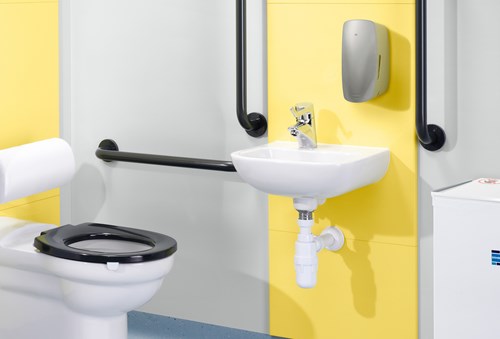
Hospital washrooms are critical spaces where hygiene and safety must be top priorities. Beyond aesthetics, these washrooms help prevent the spread of infections, protect vulnerable patients, and comply with health and safety regulations. Poorly designed washrooms can increase the risk of infections, cause accidents, and fail to meet accessibility standards, potentially harming users and exposing hospitals to liability.
Effective hospital washroom design supports:
By focusing on these factors, hospital washrooms become safe, functional spaces that support patient care and staff wellbeing.
Hospital washrooms are unlike typical public toilets. They are high traffic, with constant use by diverse groups including patients with different health conditions, visitors, and busy healthcare staff. This creates unique challenges:
Because of this, hospital washrooms must be carefully designed to handle heavy use while maintaining safety, hygiene, and ease of access for all users.
Infection control is central to hospital washroom design. Surfaces and fixtures must resist bacterial growth and be easy to clean to reduce the risk of healthcare-associated infections (HCAIs). This involves selecting the right materials and incorporating touchless technologies where possible.
In hospital washrooms, materials need to cope with constant use and intense cleaning. Surfaces that absorb moisture or stain easily can quickly become unhygienic, meaning durability and resistance to chemicals is essential. Vepps healthcare systems comply with key UK healthcare standards, including:
Touchless taps, soap dispensers, and hand dryers reduce surface contact points, lowering infection risks. Sensor-operated fixtures help maintain hygiene without compromising usability.
Infection Control Today states that ‘many infection prevention professionals believe that touchless technology is having an impact on the prevention of cross-contamination in the healthcare environment’.
Accessibility in hospital washrooms is a legal requirement and a moral imperative. Washrooms must accommodate people with disabilities or limited mobility, ensuring dignity and independence for all users.
Key accessibility features include:
Compliance with UK standards such as BS 8300 and Doc M ensures these features are correctly implemented.
In clinical environments, cubicle systems may also require emergency access so staff can quickly assist patients if needed. Systems such as System M emergency access cubicles allow doors to be opened rapidly from outside the cubicle without damaging components, helping staff respond safely while maintaining washroom integrity.
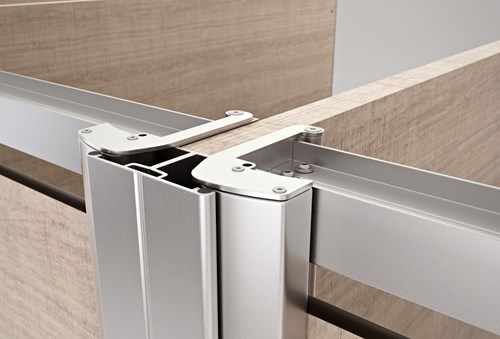
Hospital washrooms endure heavy daily use and frequent cleaning with strong chemicals. Materials must be robust and maintain appearance and function over time. Durable finishes reduce maintenance costs and downtime caused by repairs.
Ideal material characteristics include:
Our Vepps healthcare panelling excels in these areas; its tested durability suits the demands of high-use hospital washrooms, helping facilities maintain hygiene standards while reducing upkeep efforts.
User experience is often overlooked in hospital washroom design but is crucial. Clear, consistent signage helps users find washrooms quickly, reducing stress and confusion. Thoughtful layout and design contribute to a calm, reassuring environment.
Signs should be visible and use simple language and symbols. Consistency across the facility aids recognition.
Colours can influence mood and perception of cleanliness. Bright, natural lighting improves visibility and comfort. Layouts should promote easy navigation with inclusive cubicle sizes to accommodate different users.
Our washroom solutions support these principles through customisable panelling and design options that allow hospitals to create welcoming, user-friendly spaces.
Fixtures in hospital washrooms must balance hygiene, durability and usability. Sensor technology plays a key role in minimising contact points and improving infection control.
Common plumbing and fixture choices include:
Cleaning is essential in hospital washrooms but must be efficient and minimise disruption. Design choices can support cleaning staff and maintain hygiene.
Important considerations:
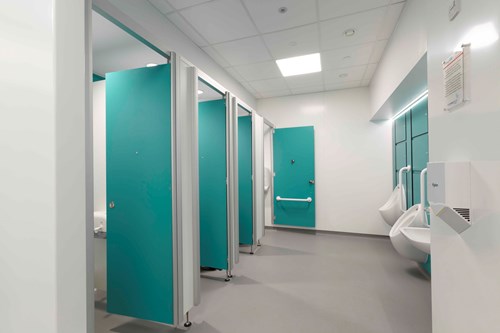
These frequently asked questions address the most common considerations when designing hospital washrooms, including hygiene, accessibility and infection control.
A common mistake is prioritising aesthetics over functionality, leading to difficult-to-clean surfaces, poor accessibility or inadequate infection control. Another is neglecting user diversity, which can exclude patients with disabilities.
Touchless technology is very important in hospital washrooms. Touchless taps, soap dispensers, and dryers reduce surface contact, lowering infection risk. They also improve convenience and hygiene for all users.
Hospital washrooms must comply with BS 8300 and Doc M, which cover accessible design features like grab rails, turning spaces, and signage.
By using antimicrobial and easy-to-clean materials, touchless fixtures, and designs that minimise dirt traps, washrooms reduce bacterial growth and cross-contamination.
Venesta’s Vepps healthcare systems are designed to meet key UK healthcare standards, ensuring products support infection control, accessibility, water safety, and sustainability requirements.
Hospital washrooms are essential spaces that require thoughtful design to meet the complex needs of healthcare environments. By focusing on hygiene, safety, accessibility, durability and user experience, designers can create washrooms that support patient care and staff wellbeing.
Venesta offers proven, compliant solutions backed by expert knowledge, making us a trusted partner in designing hospital washrooms fit for the demands of today’s healthcare facilities.
For more detailed information on healthcare compliance and washroom solutions, contact our team today to discuss your project.


